
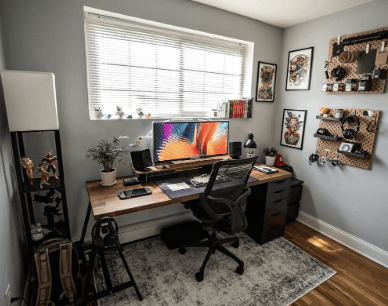
Creativity thrives where color, texture, and light meet in a calm rhythm. A home office blends cool tones for focus with warm accents to spark energy, while varied surfaces invite touch and movement. Plant life becomes living sculpture against modular furniture that reconfigures zones in moments. Cozy nooks offer soft light and personal touches, kept distraction-free. The space suggests quiet routines and visual cues that sustain momentum—and invites you to see what comes next.
How to Spark Creativity With Color and Texture
Color and texture act as immediate creative levers in a home office, guiding mood and focus without a single word spoken.
The space leverages color psychology and tactile textures to shape perception: cool tones calm, warm accents spark urgency, and varied surfaces invite touch.
Strategic combinations create rhythm, hierarchy, and momentum, inviting flexible thinking and sustained, liberated work patterns.
Adding Plant Life and Biophilic Details
Incorporating plant life and biophilic details introduces a tangible, living rhythm to the home office, where greenery anchors the space and invites subtle interaction. The layout favors mindful greenery, highlighting sculptural forms and texture.
Biophilic accents frame tasks with calm, indoor gardening routines, while a concise plant care routine supports sustained vitality and visual clarity without clutter or distraction.
Smart Organization and Flexible Layouts
Smart Organization and Flexible Layouts balance efficiency with adaptability, building on the plant-forward calm of the previous section by introducing structure that breathes. A visual system emerges, guiding a creative workflow with clean sightlines. Modular furniture shapes zones, enabling quick reconfigurations for varied tasks, while hidden storage maintains calm. Flexibility supports focus, exploration, and freedom within a disciplined, tidy environment.
Cozy Zones and Personal Touches That Fuel Focus
Cozy zones centered on a quiet, personal footprint transform a workspace into a focused sanctuary. The layout emphasizes intimate nooks with soft lighting, tactile surfaces, and curated color texture that echoes individual taste. Personal touches spark focus creativity through meaningful objects, while minimal clutter preserves momentum. Visual cues guide attention, and flexible accents invite choice, supporting steady concentration without distraction.
Frequently Asked Questions
How Do I Measure My Space for Optimal Creativity?
The space is measured by ventilation of movement and light, ensuring an ergonomic layout. He/she notes available wall-to-wall dimensions, then drafts a visual grid for space planning, balancing open zones with focused corners to foster creative flow.
See also:Exploring the Future of Tech-Driven Personalized Learning
What Lighting Is Best for Long Creative Sessions?
Soft white with cool tasklights best supports long creative sessions, reducing eye strain. The space glows with balanced luminance, guiding focus while maintaining visual clarity; the arrangement encourages freedom, organization, and uninterrupted exploration.
How Can I Minimize Distractions in a Creative Home Office?
Aiming like a lighthouse, the space minimizes distractions by establishing clear outlines for creative routines, space measurement, lighting strategies, color palettes, and mood boards refresh to sustain flow. noise management, focus rituals.
Which Color Palettes Boost Focus and Innovation?
Color psychology suggests cool palettes with balanced color temperature boost focus; palette pairings of muted blues and warm neutrals support flow, while accent neutrals ground innovation and visual rhythm for a freedom-loving, visually organized workspace.
How Often Should I Refresh Desk Inspirations or Mood Boards?
A measured refresh cadence suggests updating mood board inspiration every four to six weeks, balancing novelty with continuity. The mood board refresh should be visually organized, freely expressive, and easy to conceptualize, allowing space for evolving ideas and spontaneous sparks.
Conclusion
A calm, color-conscious workspace subtly guides the mind toward invention, while tactile surfaces keep curiosity alight at every turn. By weaving biophilic life with modular calm and personal ritual, the room becomes a living canvas where ideas form, pause, and reappear anew. Anticipated objection: “ Creativity needs chaos.” Yet the design proves otherwise—focus grows when space breathes, textures speak, and plants offer quiet companionship. In this balanced environment, momentum and imagination harmonize, inviting sustained, joyful creation.
